
What is an aftersales repair platform? Everything brands need to know
As post-purchase expectations rise and sustainability regulations tighten, a repair platform is quickly becoming one of the most valuable tools in a brand’s tech stack. This is a guide on everything you need to know about repair and maintenance.
The basics: What is a repair platform?
A repair platform is a tech build that allows retail and luxury brands to offer, manage, and track aftercare services like repairs, alterations, cleaning, customisation and restoration for their customers. Think of it as the operational backbone behind any “repair my item” experience a brand might offer.
For customers who have shopped from brands with the option to extend the life of your garments, you will know that a repair platform allows you to book, manage and track the aftercare of your loved pieces. For brands, it means visibility, control, and a new layer of post-purchase engagement that drives loyalty and longevity.

Why do brands need an aftersales solution?
Beyond consumer demand, the EU’s Ecodesign Regulation and incoming Extended Producer Responsibility (EPR) legislation mean that brands who can’t demonstrate product longevity will face increasing pressures. In France, brands selling textiles and footwear are already paying mandatory eco-contribution feeds under the AGEC Law, and those fees are ecomodulated, meaning brands producing more repairable durable products pay less, while those who don’t pay more. From July 2024, brands are legally required to tell customers about France’s Repair Fund and available repair bonuses. Miss that, and you’re none compliant.
On an EU level and mandatory EPR schemes for textiles come into force across all member states from April 2028. With non-compliance potentially meaning fines, penalties or being blocked from selling in certain markets altogether.
A repair platform lets you get ahead of this, turning a rising compliance cost into something that actually builds brand trust.
Want to see how SYW’s repair and care platform works in practice? Get a personalised walkthrough with our team. Book a demo.
What does a repair management platform actually do?
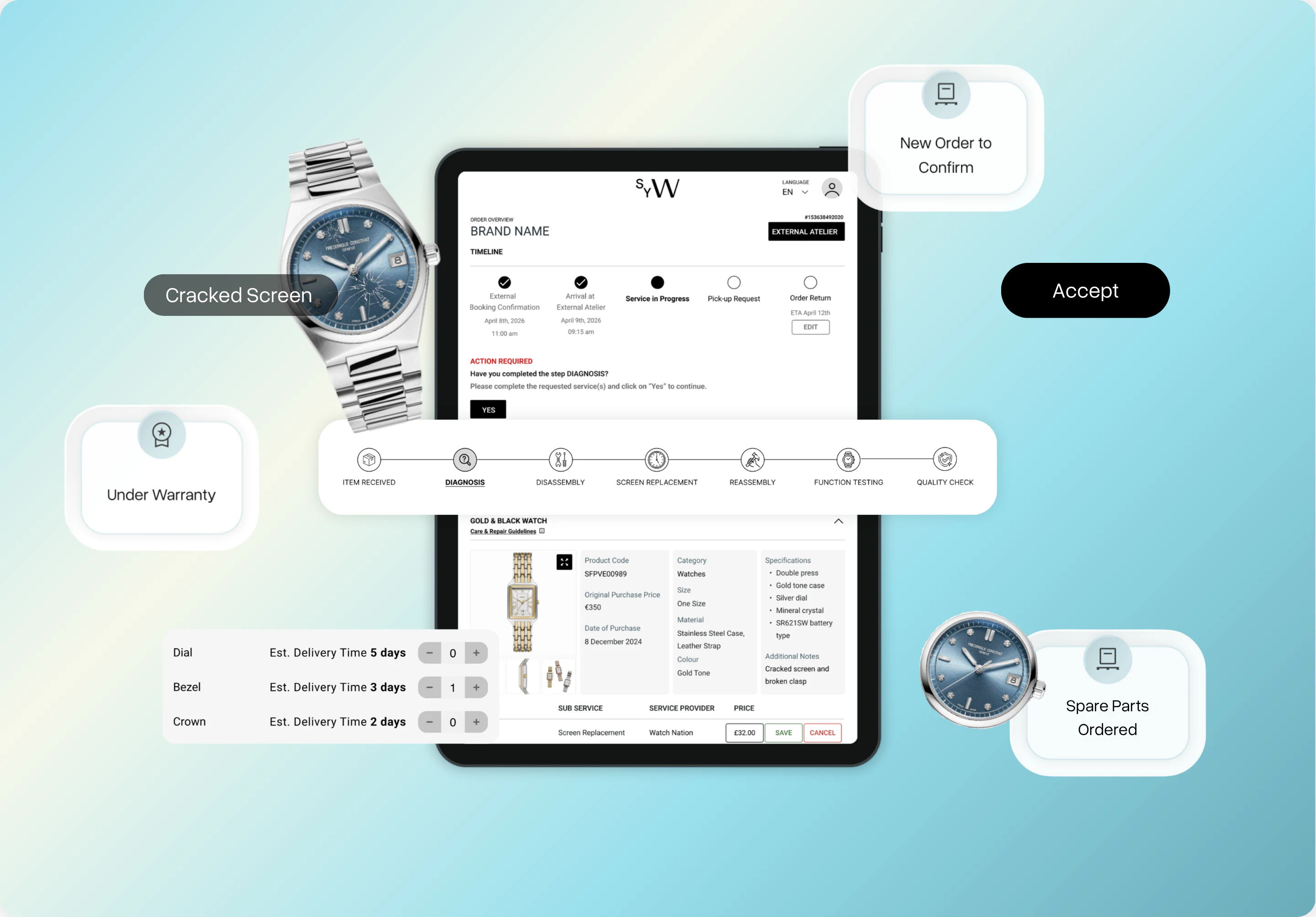
A good repair platform does a lot more than accept booking requests or handle repairs. Here’s what brands can expect from SYW aftersales solution:
- Booking management: Customers can request repairs or aftercare services directly through a brand’s own touchpoint, with no friction.
- Order tracking: Real-time visibility for both the brand and customer throughout the entire care and repair journey.
- Repair network integration: Connect with SYW’s global network of vetted, local repair partners or onboard and upskill your own in-house ateliers.
- Data and reporting: A live-data dashboard that helps you understand which products need repair the most, informing future product design decisions.
- Customer communication: Automated updates in your branding that keep customers informed at every stage.
- Endless tech opportunities: Need a warranty flow for subsidised repairs? Want to integrate repair and care into Digital Product Passports? Or integrate our platform with your existing tech stack. SYW works with brands on end-to-end aftersales solutions.
How it fits into your brand ecosystem
A repair and care solution isn't a standalone tool, it should sit naturally within your existing post-purchase journey. The best platforms integrate with your ecommerce stack, CRM, and customer service tools, meaning your team doesn’t need to manage a completely separate workflow.
For brands already offering returns, warranties, or resale, a repair platform completes the circular loop, giving you and customers a meaningful alternative to disposal at every stage of your product’s life.
Frequently asked questions
Is a repair and maintenance tool only for large fashion brands?
Not at all. Whether your a direct to consumer brand with a loyal community or a global retailer scaling your post-sale offering
How long does it take to implement a repair platform?
With the right partner, most brands are up and running within 3 weeks with SYW, not months. A phased rollout starting with a pilot category or reign is a common and low-risk approach.
What’s the difference between a repair platform and a returns portal?
A returns portal manages the returns process of a product while a repair infrastructure extends the life of a product before it reaches the point of return, they’re complementary, not competing.
Ready to build your post-sale offering?
SYW makes it straightforward for the world’s leading brands to launch, manage, and scale aftersales operations. From booking to tracking, and payments to logistics, we provide end-to-end aftersales tech with endless opportunities.
Explore our list of modular features and see the tools global brands like LVMH, Maje, H&M and Sandro are utilising today.